10 activities for SLPA home visits
No therapy bag? No problem. Bowls, blankets, tape and bath time can all become language practice with a toddler.
Why the home works so well
In early intervention, services happen in the child's natural environment, like the family's home. This doesn't simply mean moving the clinic into the living room. It means building practice into the family's everyday life: their activities and the people the child spends time with, like grandparents and siblings.
Lots of everyday things at home work well for this.
Play with things around the house
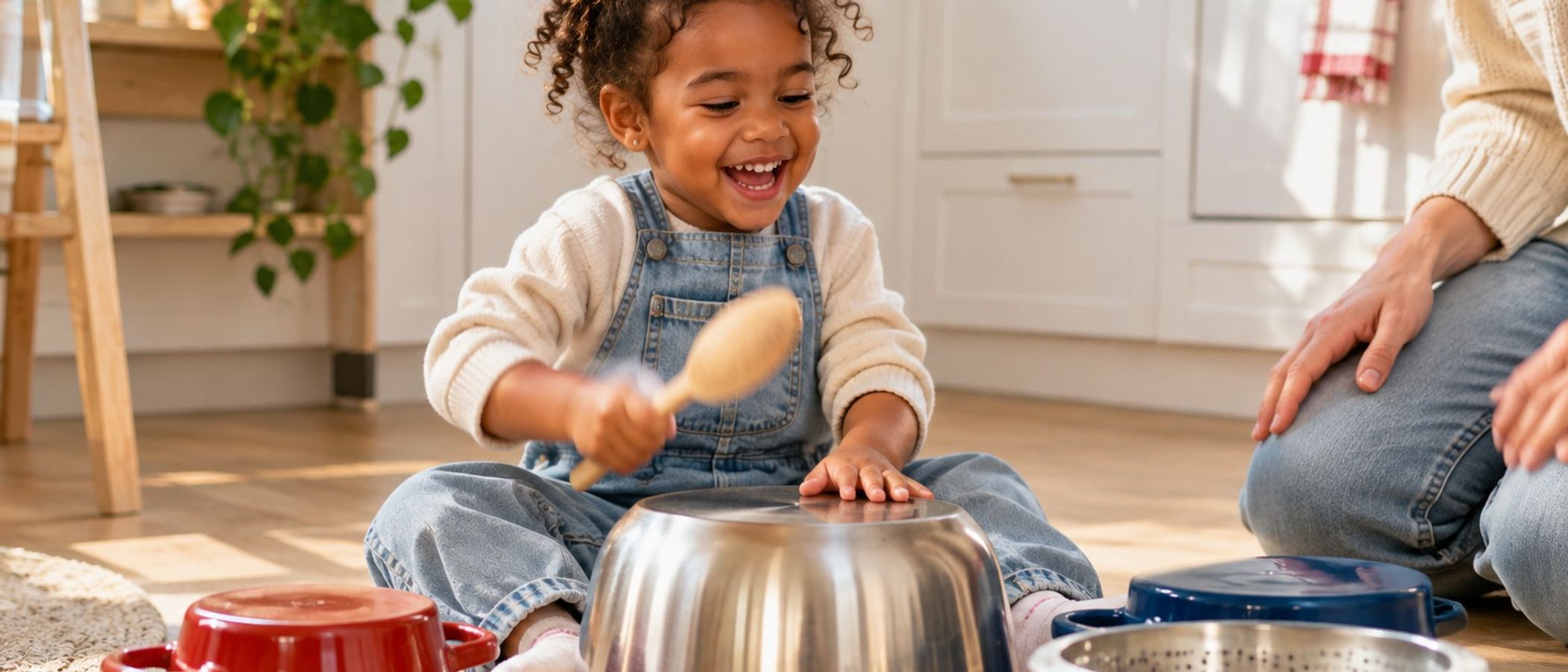
- 1Pots-and-spoon drum
Use a metal bowl and a wooden spoon as a drum. Model "loud" and "quiet", "fast" and "slow".
- 2Hide-and-find bowl
Fill a bowl with cotton balls or pasta and hide something inside. Use "Where's the…?" and "You found the…!"
- 3Blanket peekaboo and forts
Sheets, towels and couch cushions make tents, tunnels and peekaboo. Model "hide", "under", "over", "through", "behind".
- 4Cushion jumping
Let the child jump into a pile of cushions. Model action words like "climb" and "jump".
- 5Paper towel roll tunnels
Roll toy cars through cardboard tubes. Talk about what fits and what doesn't, and what rolls through slowly or quickly.
- 6Tape play
Toddlers can tear and peel masking tape, or watch a roll unspool across the floor. Model "long" and "short".
- 7Bottle bowling
Line up empty plastic bottles like bowling pins and roll a ball at them. Talk about how to set up the pins and whether to stand close or far away.
- 8Bath-time pouring
Filling and pouring plastic bottles makes bath time more fun. Describe what the child is doing as they play.
Use the family's daily routines
- 9Snack time
Don't offer the juice before the child asks for it. When they point to it, respond right away, saying "Here's your juice" as you hand over the cup.
- 10Getting dressed or brushing teeth
Use the same steps and the same words every time ("Time to get dressed"). Start by doing most of it, then hand steps over, like letting the child squeeze the toothpaste.
Label what the child is looking at right now. Timing matters more than anything else.
What makes these activities work
- Follow their lead
Notice what catches the child's interest and talk about that.
- Join in, don't direct
Play alongside instead of running the game.
- Describe what they're doing
Put words to the child's actions as they happen.
- Wait
Pause after you speak so the child has time to respond.
- Share the talking
Leave space for the child's ideas.
Part of the job is helping families learn how to encourage their child in everyday moments like these.
Want to do this work with us?
We hire SLPAs for our own team. Part-time, flexible hours, working with kids in their homes.
See open roles